
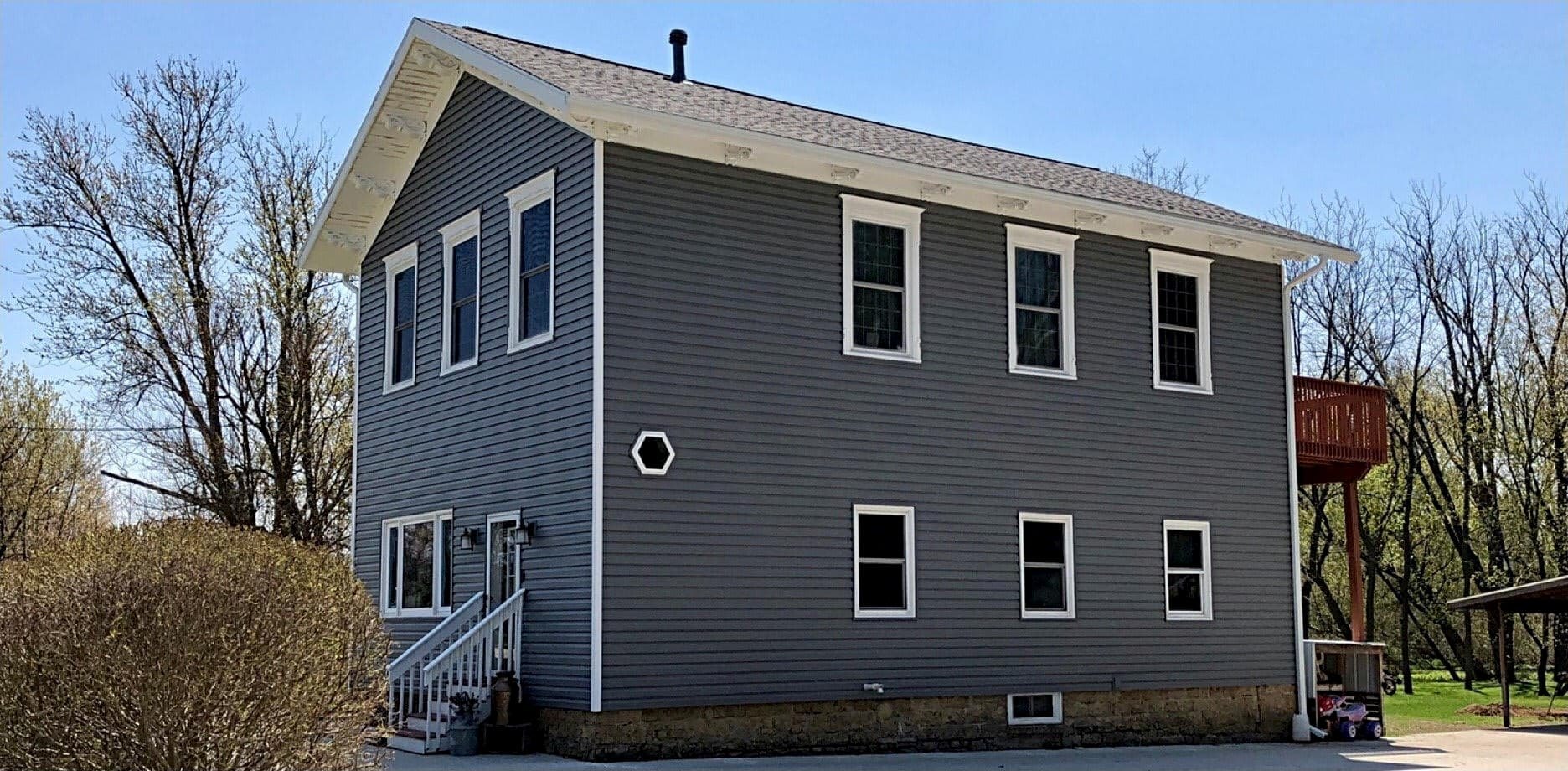
A lot of homeowners decide their siding has to go sometime in the fall. Maybe it cracked in a storm, maybe a panel blew off, or maybe the house just looks tired. Then the first cold snap hits and the question comes up: is it too late until spring?
Usually not. Siding gets installed around Rockford and the rest of the Stateline through late fall and on decent winter days. Cold weather changes how the work is done, though, so here’s what to know before you decide.
Short answer: yes, with the right installer
Siding isn’t like paint or concrete, which need warm temperatures to cure. Most of a siding job is mechanical: removing the old siding, checking the wall underneath, putting up house wrap and trim, and fastening the new panels. All of that can be done in the cold.
What matters is that the installer knows how each material behaves when it’s cold and adjusts for it.
How cold affects vinyl siding
Vinyl gets stiffer and more brittle as it gets colder. Industry installation guides warn that cold vinyl should be cut carefully and never struck with a hammer, because it can crack.
Vinyl also grows and shrinks with temperature. A long panel can move half an inch or more between a cold winter morning and a hot July afternoon. That’s normal, and it’s why vinyl is hung loosely on its nails so it can slide.
In cold weather that movement matters even more. A panel installed at 20 degrees is at its shortest. When summer comes, it will expand. So installation guides call for a larger gap at corners and trim when it’s below about 40 degrees, giving the panel room to grow. If a panel is installed tight in winter, it can buckle and wave in summer.
A good vinyl installer in a Northern Illinois winter will:
- Store and handle panels carefully so they don’t crack.
- Leave the right expansion gap for the temperature that day.
- Nail in the center of the slots and not too tight, so panels can move.
- Skip hammering or forcing panels into place.
Learn more about the product in our post on why homeowners choose vinyl siding.
How cold affects James Hardie siding
James Hardie fiber cement siding doesn’t get brittle in the cold the way vinyl does, and it barely expands or contracts with temperature. James Hardie makes its HZ5 product line for climates with freezing temperatures, snow and ice, which includes ours.
There are a few things cold weather does change:
- Touch-up and sealing. Hardie’s ColorPlus siding comes with its finish baked on at the factory, so there’s no painting on site. But face touch-ups need a warmer day. James Hardie’s cold-climate guidance says ColorPlus siding can still be installed when it’s colder than 35 degrees, and edges can be sealed then, but touch-up on the face of the siding should wait for a day above about 35 degrees.
- Caulk. Where caulk is needed, it has to be applied following the sealant maker’s temperature instructions.
- Snow and ice on the walls. House wrap and flashing need to go onto a dry, clean surface.
As a certified James Hardie installer, we follow Hardie’s installation requirements in every season. We install siding in winter too, so a storm in November doesn’t mean living with broken siding until spring. See our James Hardie siding page for profiles and colors.
What else changes in winter
Shorter days. Less daylight means less working time. Most siding jobs still take 1 to 2 days, but a big or complicated house may stretch a little.
Weather days. Heavy snow, ice or high winds stop work. In late fall and winter, jobs get scheduled around good days, and some days get bumped.
Your house is open for a short time. When old siding comes off, the wall is exposed. A good installer removes only as much as can be wrapped and covered that same day.
Reasons to do it now instead of waiting
- It’s actively failing. Cracked, loose or missing panels let water and cold air in. A winter of freeze-thaw can turn a small problem into rotted sheathing.
- You’re tired of the drafts. Old siding with gaps behind it can make rooms feel colder. New house wrap and siding help seal the wall.
Reasons waiting for spring is fine
- The siding is ugly but sound. If it’s faded or dated but still keeping water out, there’s no rush.
- You want to see colors in daylight. Picking a color is easier when you can see homes around you without snow or gray skies.
- You’re planning a roof too. If the roof is also due, you may want to plan both projects together.
If you wait, get a quick look now so you know nothing will leak this winter, and book your spring date early.
Questions to ask before a winter siding job
- How do you handle cold-weather expansion gaps on vinyl?
- How much wall will be open at once, and how is it covered at the end of the day?
- What happens if snow or ice moves in mid-job?
- Which touch-up or caulking steps need a warmer day, and when will you come back for them?
Talk to a local siding team
Martin Exteriors has been siding homes across the Stateline since 2006, and we’ve been voted What Rocks Rockford Best Siding Contractor, 2021 to 2025. Most siding jobs are done in 1 to 2 days, and financing is available as low as $149/month for qualified buyers.
Read more about our siding services, schedule a free estimate, or call (815) 624-6278.
Frequently Asked Questions
Can vinyl siding be installed in cold weather?
Yes. Vinyl is more brittle in the cold, so it has to be cut and handled carefully, and installers leave larger expansion gaps at corners and trim when it’s below about 40 degrees so the panels don’t buckle in summer.
Can James Hardie siding be installed in winter?
Yes. Fiber cement doesn’t get brittle in the cold. James Hardie’s guidance says ColorPlus siding can be installed when it’s colder than 35 degrees, but face touch-up should wait for a warmer day.
How long does a siding job take in winter?
Most siding jobs take 1 to 2 days. Shorter days and weather can stretch the schedule a little in winter.
Is it cheaper to replace siding in winter?
Pricing depends on the home and the product, not the season. Ask for a free estimate to see your options.
