
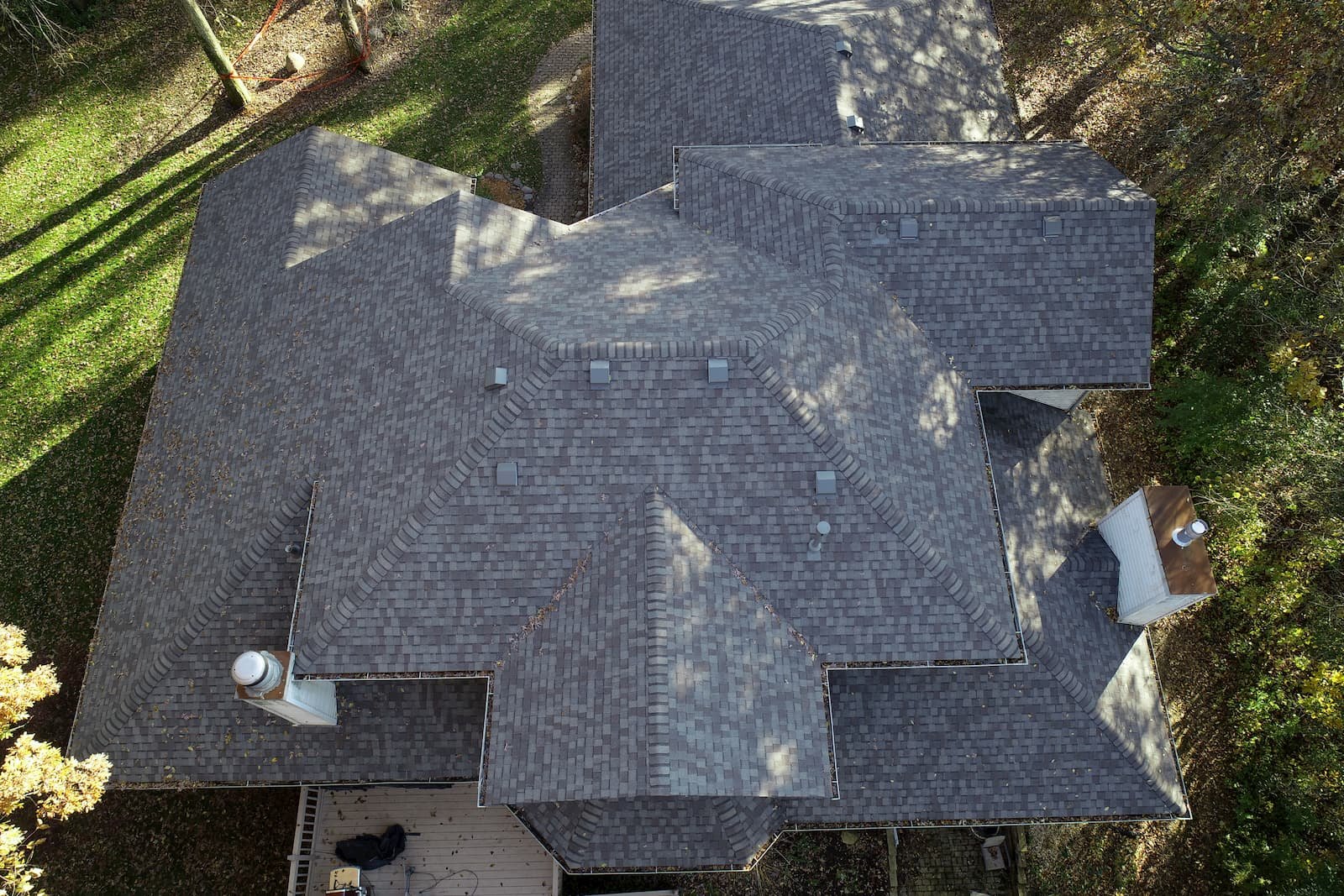
When a new roof goes on, you see the shingles. What you don’t see is everything underneath: the metal at the edges, the leak barrier, the flashing at the chimney and the vents at the ridge. Those hidden parts are what actually keep water out.
They’re also the parts that sometimes get skipped. It happens more than you’d think: one local homeowner’s online review describes paying for flashing and drip edge that were never installed, and finding out only when leaks started about two years later.
Here’s a simple checklist to make sure your new roof has everything it should, whoever installs it.
Before the job: get it in writing
Your contract or quote should list the main parts of the roof system, not just “new roof.” Look for:
- Full tear-off of the old roof
- Decking check and replacement of damaged boards
- Drip edge
- Leak barrier (often called ice and water shield) at the eaves and valleys
- Underlayment over the rest of the deck
- Starter strips
- Flashing at chimneys, walls and skylights
- Pipe boots and vents
- Ridge vent or other exhaust ventilation
- Ridge cap shingles
- The shingle brand, line and color
- Cleanup and magnetic nail sweep
- Warranty details
If something on that list isn’t mentioned, ask about it before you sign. Our post on red flags when hiring a roofer covers more warning signs.
Ask for photos during the job
The easiest way to know what went under your shingles is to see it. Ask your roofer up front for photos of:
- The bare deck after tear-off, plus any boards that were replaced
- Leak barrier along the eaves and in the valleys
- Drip edge at the roof edges
- New flashing at the chimney and walls before shingles cover it
- Pipe boots and vents going in
A good contractor won’t mind. Photos protect them too.
What each hidden part does
Drip edge. A metal strip along the roof edges that directs water off the roof and away from the fascia boards. Without it, water can wick back under the shingles and rot the edge of the deck.
Leak barrier. A self-sticking membrane along the eaves and in valleys. In a Northern Illinois winter, ice dams can back water up under the shingles at the edge. This layer is the backup that keeps that water out of your house.
Underlayment. A layer over the rest of the deck that adds protection under the shingles.
Starter strips. Special shingles along the eaves and rakes that seal down the first row. They’re a big part of how well the roof edges hold up in high winds.
Flashing. Metal at chimneys, walls and other places where the roof meets something. It’s one of the most common places for leaks to start, and it’s a part that sometimes gets reused or skipped. Ask whether old flashing is being replaced or reused, and why.
Ventilation. Intake at the eaves and exhaust at or near the ridge let the attic breathe. Good airflow helps prevent ice dams and moisture, and helps shingles last. Learn more on our attic ventilation page.
Ridge cap. Thicker shingles made for the peak of the roof, where wind hits hardest.
When these parts come from the same manufacturer and go on as a system, they work together. GAF, for example, ties some of its warranty coverage to using its starter strips, underlayment, leak barrier or ventilation, and ridge caps along with its shingles. Ask us which GAF warranty tier fits your roof.
After the job: a 10-minute walk-around
You don’t need to climb on the roof. From the ground and the driveway, check:
- Roof edges: You should see a neat metal edge (drip edge) along the bottom and sides of the roof.
- Ridge: The peak should have ridge cap shingles, and you may see a ridge vent running along it.
- Chimney: Look for clean new metal flashing where the roof meets the chimney, not old rusty metal or heavy tar.
- Pipes and vents: Boots and vents should look new and sit flat.
- Shingle lines: Rows should look straight, with no lifted or crooked pieces.
- Yard and driveway: No nails, scraps or shingle pieces left behind. A magnetic sweep should have picked up stray nails.
- Attic: If you can get up there, look for daylight coming through anywhere it shouldn’t and for any damp spots after the next rain.
Paperwork to keep
Ask for, and keep in one place:
- The final invoice listing what was installed
- Job photos
- The shingle brand, line and color
- Your manufacturer warranty documents, and confirmation that the warranty has been registered
- The contractor’s workmanship warranty in writing
If you ever sell the house, buyers will ask for these.
Something look wrong?
Call the contractor first and ask them to come out and explain. A reputable company will fix a real problem quickly. If you can’t get answers, have another roofer take a look before small issues turn into leaks.
How we do it at Martin Exteriors
We’ve been replacing roofs across the Stateline since 2006. As a GAF Master Elite contractor, a status fewer than 2% of roofing contractors earn, we can offer a 50-year GAF warranty with up to 30 years on workmanship on qualifying roofs (GAF eligibility rules apply). Every roof also comes with our workmanship warranty, and most roofs are done in a day.
Learn about our roof replacement service, schedule a free roof inspection, or call (815) 624-6278. Financing is available as low as $149/month for qualified buyers.
Frequently Asked Questions
What should be included in a new roof?
A complete roof usually includes tear-off, a decking check, drip edge, leak barrier at the eaves and valleys, underlayment, starter strips, new flashing, pipe boots and vents, ridge ventilation, ridge cap shingles, cleanup and warranty details.
How can I tell if my roofer installed drip edge?
Look at the roof edges from the ground. You should see a metal strip along the bottom and sides. Ask your roofer for photos taken during the job too.
Should old flashing be reused on a new roof?
Ask your roofer what they plan to do and why. Flashing is a common leak point, so worn, rusted or poorly fitted flashing should be replaced.
What paperwork should I get after a roof replacement?
Keep the final invoice, job photos, the shingle brand and color, your manufacturer warranty documents with confirmation that the warranty is registered, and the workmanship warranty in writing.
