
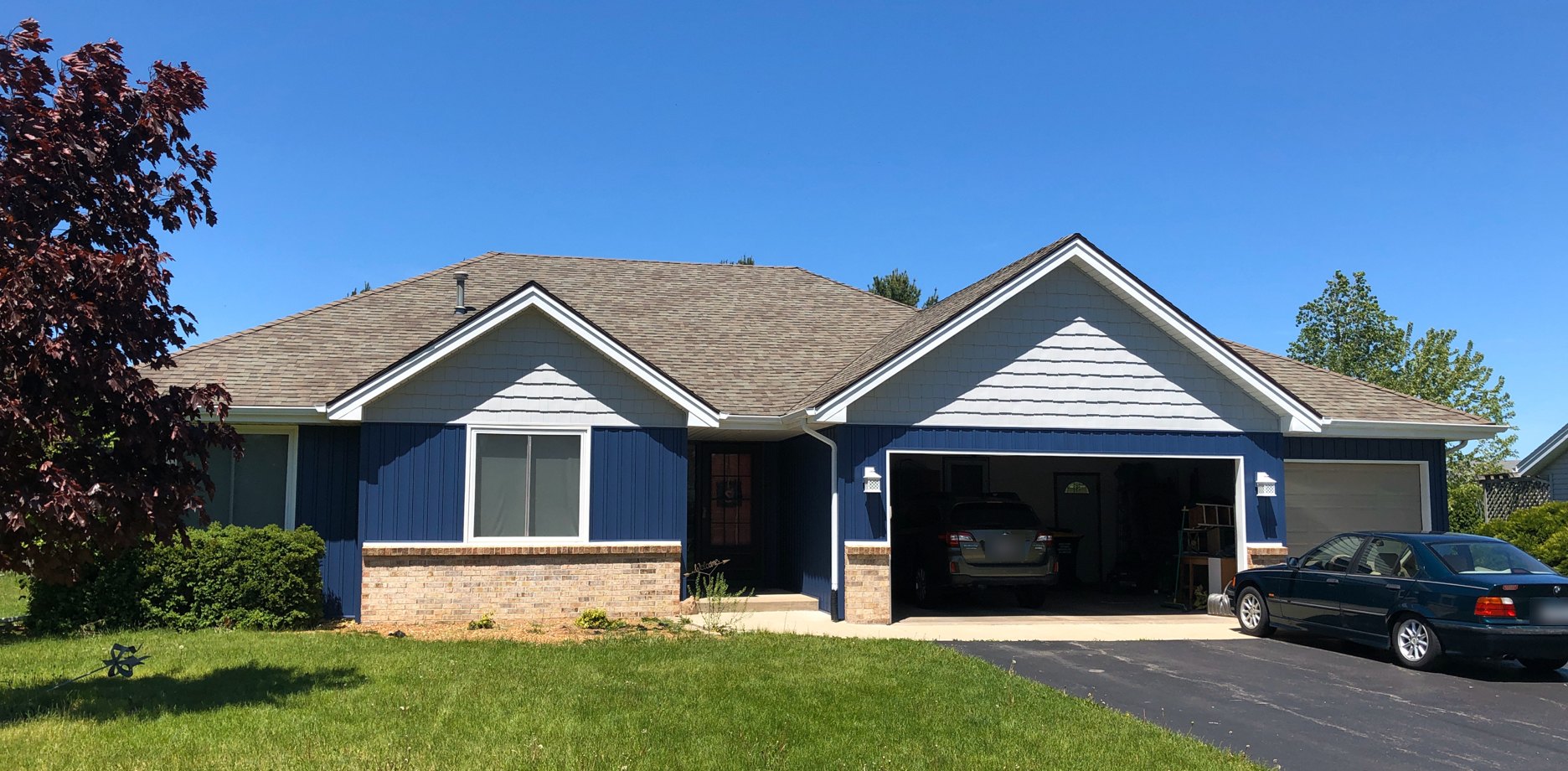
Siding takes a beating in Northern Illinois and southern Wisconsin. Summer sun, high winds, hail, ice and dozens of freeze-thaw cycles all work on it every year.
Most siding problems start small: a loose panel, a gap at a corner, a soft spot on a trim board. Caught in the fall, they’re usually easy fixes. Left alone through a Stateline winter, water gets in, freezes, expands and makes them worse.
Here’s a 15-minute walk-around you can do this weekend.
Before you start
Pick a dry, bright day. Walk all the way around the house, including the side yard nobody uses and the wall behind the shrubs. Bring your phone and take a photo of each wall. Those photos make it easy to spot anything new next spring.
You don’t need a ladder. Everything on this list can be checked from the ground.
The checklist
1. Loose or popped panels
Look along each wall for panels that have come unhooked at the bottom or bow out from the wall. High winds can lift vinyl panels, especially at corners and on the side of the house that takes the most weather.
A panel that’s popped loose can often be snapped back into place. If it won’t stay, or if it flaps in the wind, it may have damaged nails or a broken lock and should be refastened.
2. Cracks, holes and chips
Look for cracked or broken pieces. Common causes are hail, a ball or a lawn mower kicking up a stone. On vinyl, cracks get worse in the cold because the material gets more brittle.
Holes matter even when they’re small. Water, insects and mice can all get through.
3. Warping, bubbling and melting
Wavy or bubbled vinyl usually means heat, often from a grill set too close to the wall or sunlight reflected off something nearby. It can also mean the siding was nailed too tight to move with the temperature.
Warping won’t usually cause a leak on its own, but buckled panels can open gaps at the seams.
4. Gaps at corners, trim and openings
Check where siding meets corner posts, trim boards, doors, vents and the roof line. Look for pieces that have pulled apart and caulk that has cracked where caulk belongs. These spots are where wind-driven rain gets behind siding.
Don’t caulk vinyl siding where it slides into corners or trim channels. It needs room to move. If you’re unsure, ask a pro.
5. Soft spots and stains
Press gently on trim boards and on any wood or older composite siding. Soft, spongy spots, peeling paint that keeps coming back, or dark streaks that run down from a seam can all mean water is getting behind the surface.
6. Mildew and algae
Green or black film is common on shaded and north-facing walls. Clean it with a soft brush, a garden hose and a mild cleaner made for siding. Skip high-pressure washing, which can force water up behind panels.
7. The bottom of the wall
Siding that’s buried in mulch, soil or a pile of leaves stays wet and gives bugs an easy path in. Pull landscaping back so the bottom edge can dry, and aim sprinklers away from the house.
8. Branches and plants
Trim back branches that touch the house. They scrape siding in the wind and make a highway for squirrels. Vines can work into seams and hold moisture against the wall.
9. Vents and wall openings
Check dryer vents, bath fan vents and where pipes or wires go through the wall. Flaps should close, and the siding around them should be sealed and undamaged.
What you can do yourself
- Snap a loose vinyl panel back into place
- Wash off mildew and dirt
- Pull mulch and soil back from the wall
- Trim branches and plants
- Move the grill away from the house
When to call a pro
Call a siding contractor if you find:
- Cracked, broken or missing panels. Matching and replacing them right takes the correct profile and color.
- Soft trim or sheathing. That means water has been getting in, and the damage may be bigger behind the surface.
- Panels that won’t stay put or keep blowing loose.
- Damage over large areas, or problems that keep coming back.
If the siding is old, faded or discontinued, a repair may not match. That’s often the point where homeowners start looking at new vinyl or James Hardie siding. Our post on why homeowners choose vinyl siding covers the vinyl side. Most full siding jobs are done in 1 to 2 days, and siding can be installed in the cold when the installer follows cold-weather steps.
After winter
Do the same walk-around in spring and compare to your fall photos. Look closely after any big wind or hail storm too, since siding damage is easy to miss from inside.
Siding help across the Stateline
Martin Exteriors has been siding homes across northern Illinois and southern Wisconsin since 2006. We’re a certified James Hardie installer, and we’ve been voted What Rocks Rockford Best Siding Contractor, 2021 to 2025. Financing is available as low as $149/month for qualified buyers.
Learn more about our siding services, schedule a free estimate, or call (815) 624-6278.
Frequently Asked Questions
How often should I check my siding?
Twice a year is a good habit: once in fall before winter and once in spring. Check again after any big wind or hail storm.
Can I fix a loose vinyl siding panel myself?
Often, yes. A panel that has popped loose at the bottom can usually be snapped back into place. If it won’t stay or keeps blowing loose, have a pro refasten it.
How do I clean mildew off siding?
Use a soft brush, a garden hose and a mild cleaner made for siding. Avoid high-pressure washing, which can force water behind panels.
When does siding need to be replaced instead of repaired?
Replacement is worth considering when damage covers large areas, problems keep coming back, there’s soft sheathing behind the siding, or the old siding is faded or discontinued so repairs won’t match.
