It’s January. There’s a brown spot spreading on the bedroom ceiling, the forecast says snow all week, and you’re wondering whether anybody will even get on a roof until April.
Good news: a lot of roof repair work can be done in winter around Rockford. Some jobs are better done right away, some should get a temporary fix now and a permanent one later, and some leaks aren’t really “roof problems” at all. Here’s how we sort it out.
Yes, roofers work in winter (with a few rules)
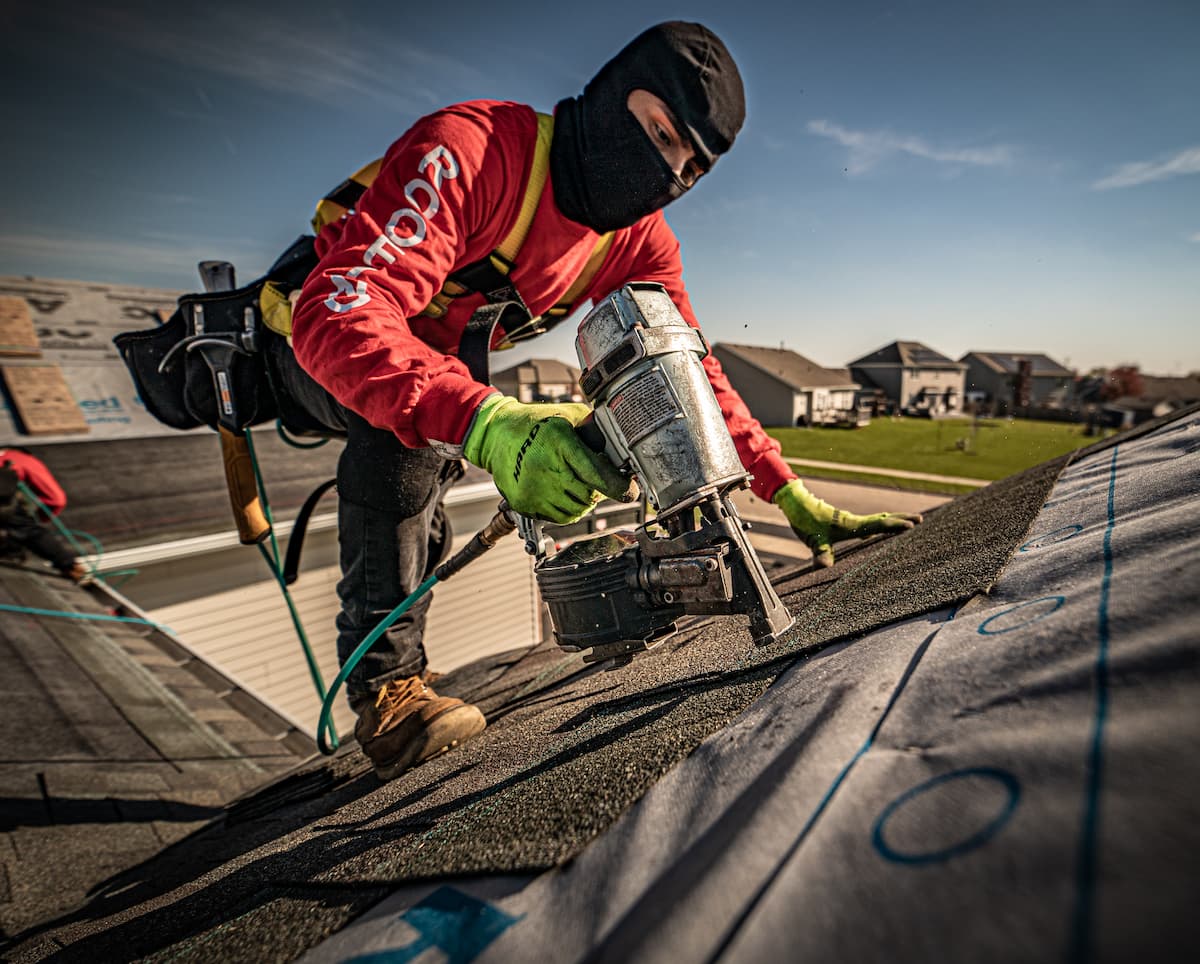
Northern Illinois roofers don’t shut down when it gets cold. What changes is how the work is done.
- Safety comes first. Snow and ice on a roof are dangerous. We clear the work area and won’t put a crew on an iced-over roof just to say we showed up.
- Shingles behave differently in the cold. Asphalt shingles get stiffer, and the self-sealing strips on the back need warmth from the sun to bond. In cold weather, good crews follow the manufacturer’s cold-weather instructions, which often means hand-sealing tabs with roofing cement so they don’t lift in the wind before spring.
- Daylight is short. Winter repairs are scheduled around shorter days and breaks in the weather. A small repair is often done in a few hours.
What can usually be repaired in winter
These are the calls we handle most often between November and March:
- Missing or blown-off shingles. A December wind can strip a few tabs. Replacing them quickly keeps water out of the deck.
- Cracked or failed pipe boots. The rubber collars around plumbing vents crack with age and cold. This is one of the most common leak sources we find, and it’s a quick fix.
- Flashing problems around chimneys, skylights, and walls. Loose or rusted flashing can be resealed or replaced.
- Damaged vents. Hail-dented or wind-damaged vents can be swapped out.
- Small storm damage. A branch or a localized wind problem can usually be patched properly.
What’s better as a temporary fix now, permanent later
Some problems are too big, or the weather is too rough, for a permanent fix in mid-winter. Then the goal is to stop the water now and plan the real fix for a better day:
- Large damaged areas after a storm may get tarped or temporarily sealed until a dry stretch.
- A roof at the end of its life. If the shingles are failing everywhere, patching one spot after another in January is a losing game. We’ll stop the active leak and talk honestly about a replacement, which can often still be scheduled in winter on decent days. Most roofs are replaced in a day.
- Soft or rotted decking found during a repair may need a bigger plan than a quick patch.
Is it a leak, or is it an ice dam?
Here’s the big one in Rockford. A lot of “winter roof leaks” are actually ice dams.
Heat escapes from the house into the attic and melts the snow on the upper roof. The water runs down to the cold eaves, refreezes, and builds a ridge of ice. More meltwater backs up behind that ridge and works its way under the shingles. That’s why the stain often shows up near an exterior wall, a few feet in from the edge of the roof.
Signs it’s an ice dam and not a hole in the roof:
- Thick icicles and a ridge of ice along the edge of the roof
- The leak shows up during or right after a thaw, not during a cold, dry stretch
- The stain sits near an outside wall or a ceiling corner
Patching shingles won’t fix an ice dam. The long-term fix is better attic insulation and ventilation, plus ice and water shield at the eaves when the roof is replaced. For the full rundown, see our guide on how to prevent ice dams.
Don’t chip at the ice with a hammer, shovel, or ice pick. It’s easy to tear shingles and hurt yourself. If you rake snow off the roof, do it from the ground with a roof rake, never from a ladder.
What to do the moment you see a winter leak
- Catch the water. Put out buckets or towels and move anything valuable.
- Relieve a bulging ceiling carefully. If water is pooling in drywall, a small hole at the low point lets it drain into a bucket instead of bringing down the ceiling. Only do this if you’re comfortable, and stay out from under it.
- Take photos of the ceiling, the attic if you can safely look, and the outside of the roof from the ground.
- Don’t go on the roof. Seriously. Not in winter.
- Call a licensed roofer. In Illinois, roofing work has to be done by a contractor licensed by the state (ours is IL 104.017824).
There’s more on this in our post on what to do if your roof suddenly starts leaking.
Does insurance cover winter roof damage?
It depends on the cause and your policy. Sudden damage from wind, a fallen tree, or the weight of snow and ice is often handled differently than wear and tear or a problem that built up slowly. If we find storm damage, we’ll document it with photos and help you through the claim. If it’s age or maintenance, we’ll tell you that too.
Paying for a bigger repair or replacement
If a winter repair turns into a “this roof is done” conversation, financing is available as low as $149/month for qualified buyers. Nobody wants a new roof in January, but it beats a ceiling coming down.
Roof repair in Rockford, all year
Martin Exteriors Roofing & Siding has been serving Rockford-area families since 2006. We’re a GAF Master Elite contractor, and we have been voted What Rocks Rockford Best Roofing Contractor, 6 years running (2020 to 2025). When something goes wrong in the middle of winter, you’ll talk to a real person, and we’ll tell you straight whether it needs a quick repair, a temporary fix, or a bigger plan.
Need roof repair in Rockford or emergency roof repair? Call us at (815) 624-6278 or stop by our Rockford office at 6019 Fincham Dr, Suite 4. Not sure what’s going on up there? Start with a free roof inspection.
Winter Roof Repair FAQs
Can a roof be repaired in the winter?
Yes. Most common repairs, like missing shingles, cracked pipe boots, flashing, and vents, can be done in winter when it’s safe to be on the roof. Crews follow the manufacturer’s cold-weather instructions, such as hand-sealing shingle tabs.
Is it bad to replace a roof in winter?
Not necessarily. Roofs can be replaced in winter on workable days, with cold-weather installation steps. Most roofs are replaced in a day, which helps a lot with short breaks in winter weather.
Why is my roof leaking only when the snow melts?
That’s often an ice dam. Meltwater refreezes at the cold eaves and backs up under the shingles. The fix usually involves attic ventilation and insulation, not just shingle patching.
Should I remove ice dams myself?
Don’t chip at ice on the roof, because it damages shingles and isn’t safe. Raking snow from the bottom few feet of the roof, from the ground, can help prevent new dams.
How fast can you come out for a winter leak?
Call us at (815) 624-6278 and we’ll get you scheduled as quickly as weather and safety allow.
Do you charge for an inspection?
No. Roof inspections are free, and you’ll get photos of what we found.
