
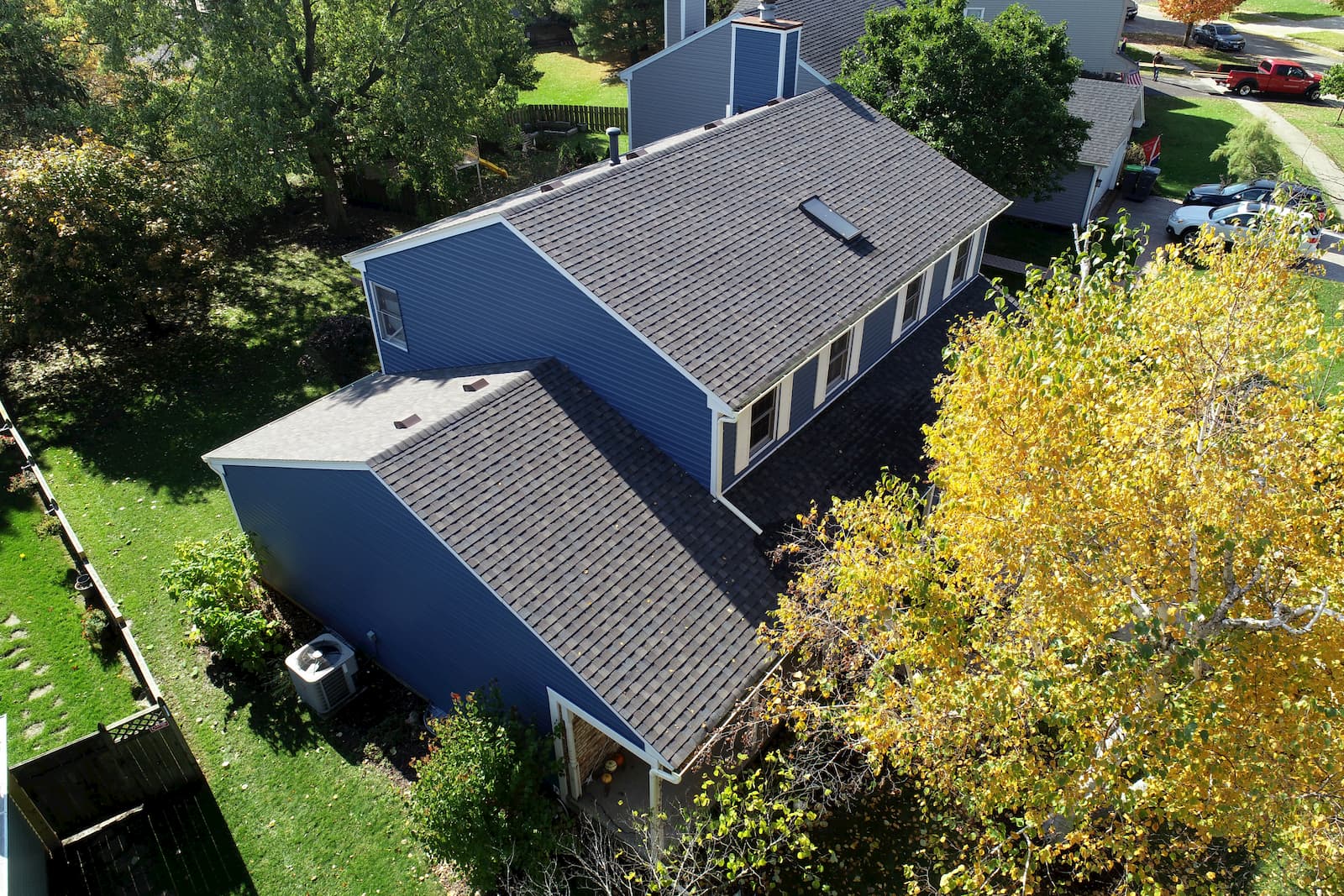
Belvidere knows what wind can do. Tornadoes and high winds are part of life in northern Illinois, and Boone County has seen its share over the years.
Most windy days are nothing like a tornado, thankfully. But even an ordinary fall or spring storm with strong gusts can loosen shingles and siding in ways that aren’t obvious until the next rain. Here’s how wind damage happens, how to spot it from the ground, and what makes a roof hold up better next time.
How wind actually damages a roof
Wind doesn’t usually rip off a whole roof. It works on the weak spots.
- Edges, corners and ridges take the hardest hit. Wind moving over a roof creates lift, and it’s strongest along the eaves, the rakes (the sloped edges at the gable ends) and the ridge.
- Unsealed shingles lift first. Shingles are held down by nails and a strip of sealant that bonds each course to the one below. If that seal never formed or has let go with age, the shingle can flap in the wind.
- Creased shingles are easy to miss. When a shingle lifts and folds back, it can drop back into place looking normal but with a crease across it. That crease breaks the seal and weakens the shingle, and it often blows off in the next storm.
- Nails pull up over time. Repeated lifting can work nails loose, which leaves holes for water to find later.
- Siding unlocks. Vinyl siding panels lock into each other. Strong gusts can pop them loose, especially near corners and on the side facing the storm, and flying debris can crack them.
How to check for wind damage from the ground
Please stay off the roof. A good look from the yard tells you a lot.
- Walk around the house. Look for pieces of shingle, ridge cap or siding in the yard, and notice which side of the house they came from.
- Scan the roof edges and ridge. Missing pieces, shingles that look raised, or a shingle sitting at a slightly different angle than its neighbors can all point to wind damage. Binoculars help.
- Look for exposed patches. A dark or different-colored spot can mean a shingle is gone and the underlayment or deck is showing.
- Check the siding. Look for panels that are loose, bowed or out of line, particularly near corners.
- Head into the attic. After the next rain, look for wet spots or daylight coming through the roof deck.
If you find missing shingles, our post on why shingles go missing covers what usually causes it and what to do next.
What makes a roof more wind resistant
When a roof is replaced, a few details make a real difference in how it handles the next big wind:
- Starter strips at the eaves and rakes. These give the first row of shingles a sealed edge exactly where wind lifts hardest.
- Correct nailing. Nails need to go in the shingle’s nailing zone, in the right number, driven flush. Nails that are too high or overdriven are a common reason shingles blow off.
- Matching ridge cap shingles. The ridge is a high-wind area and needs ridge caps made for the job, not cut-up field shingles.
- A complete system. Underlayment, leak barrier at the eaves and balanced attic ventilation all help the roof perform as designed.
GAF backs this up with its WindProven limited wind warranty. GAF offers it for 15 years with no maximum wind speed when Timberline shingles with LayerLock technology are installed with GAF starter strips, roof deck protection, ridge cap shingles, and either leak barrier or attic ventilation, following GAF’s instructions. As a GAF Master Elite contractor, a status fewer than 2% of roofing contractors earn, Martin Exteriors can offer a 50-year GAF warranty with up to 30 years on workmanship on qualifying roofs (GAF eligibility rules apply).
One more thing to know: shingles installed in cold weather can take longer to fully seal, sometimes until warmer days in spring. Proper fastening matters even more on a late-season roof.
What about siding?
Wind-damaged siding is worth fixing quickly. A loose panel lets rain and snow get behind it, and it can pull its neighbors loose in the next storm. Sometimes a few panels can be reset or replaced. If the siding is old, brittle or faded so much that new panels won’t match, replacing a full wall or the whole house may make more sense. Most siding jobs are done in 1 to 2 days.
After a windy night: what to do
If wind has opened up your roof or water is coming in, call us. We’re open 24/7, and tarping is available within 24 hours. Learn more about our wind damage repair and emergency roof repair services.
Your Belvidere roofer since 2006
Martin Exteriors has been working on homes across Boone and Winnebago counties since 2006. Whether you need a quick repair after a storm or a new roof built to stand up to the next one, we’ll give you a straight answer. Learn more about roofing in Belvidere, or call (815) 624-6278 to schedule a free inspection.
Frequently Asked Questions
How can I tell if my roof has wind damage?
From the ground, look for shingle pieces in the yard, missing or raised shingles along the edges and ridge, and patches where the underlayment shows. After the next rain, check the attic for wet spots. Creased shingles can be hard to see, so an inspection is the surest way to know.
Why do shingles blow off a fairly new roof?
The most common reasons are shingles that never sealed, nails placed too high or driven too deep, or missing starter strips at the edges. Shingles installed in cold weather can also take longer to fully seal, sometimes until warmer days in spring.
What makes a new roof more wind resistant?
Starter strips at the eaves and rakes, correct nail placement, proper ridge cap shingles and a complete roofing system with underlayment, leak barrier and balanced ventilation. Installing qualifying GAF products this way can also make the roof eligible for GAF’s WindProven limited wind warranty.
What should I do if wind tears shingles off my roof at night?
Stay off the roof, move belongings away from any leaks and take photos. Then call us. We are open 24/7, and tarping is available within 24 hours.
